

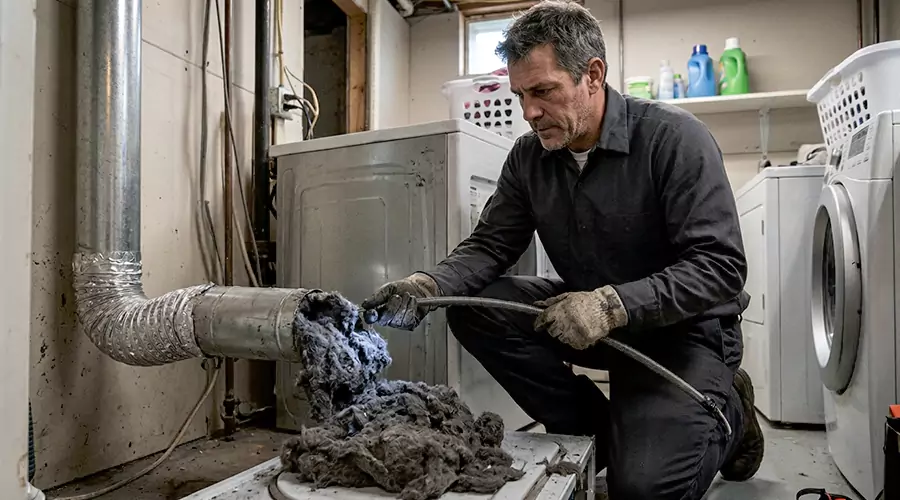
Yes, a clogged dryer vent can contribute to a house fire by restricting airflow, causing excessive heat buildup, and allowing combustible lint to accumulate inside the dryer or exhaust system. The U.S. Consumer Product Safety Commission (CPSC) warns that lint blockages can create overheating conditions that result in fires in some dryers.
Clothes dryers are common household appliances, but their safe operation depends on adequate ventilation and regular maintenance. During drying, warm air moves through wet clothing, collects moisture, and exits through an exhaust duct. Small fibers released from clothing can accumulate inside the dryer and vent system. Although the removable lint screen captures much of this material, it does not prevent every particle from entering the exhaust passage.
As buildup increases, airflow may become restricted. A dryer can then operate at higher temperatures, take longer to dry clothes, and experience additional mechanical or electrical stress. If the vent is damaged, crushed, or severely deteriorated, dryer vent replacement may be necessary to restore proper airflow and reduce potential fire hazards. Understanding these conditions helps homeowners recognize when dryer vent cleaning is a safety priority rather than simply a maintenance task.
How Does a Clogged Dryer Vent Cause a Fire?
A conventional dryer needs sufficient exhaust airflow to carry heat and moisture out of the appliance. When the vent becomes obstructed, hot air cannot leave as efficiently. The CPSC explains that lint accumulation can block airflow and produce excessive heat buildup. Under certain conditions, accumulated lint can ignite. A blocked vent does not automatically cause a fire every time a dryer runs. However, the restriction can contribute to dangerous conditions, particularly when other appliance faults are present. The risk is greater when the system contains heavy lint deposits or the appliance is operating abnormally.
How Common Are Dryer Fires in Homes?
The U.S. Fire Administration (USFA) identifies failure to clean as a major contributing factor in residential clothes dryer fires. According to USFA data covering 2018 through 2020, failure to clean contributed to the ignition of approximately 31% of reported home clothes dryer fires. This statistic does not mean every dryer fire begins inside a clogged exhaust duct. Fires can also involve internal lint, mechanical failures, electrical problems, and other ignition sources. The findings demonstrate why cleaning both the dryer and its exhaust system is an important part of prevention.
Why Is Dryer Lint a Fire Hazard?
Dryer lint consists of small fibers separated from clothing and other laundry items. These fibers can accumulate around filters, within internal dryer compartments, and along the exhaust duct. Lint is combustible. When exposed to sufficiently high temperatures or an ignition source, accumulated material can catch fire. The CPSC recommends cleaning the lint screen before or after every load and periodically cleaning the exhaust duct. It also advises having qualified personnel remove lint from inside the dryer chassis. Cleaning only the removable filter does not eliminate all lint from the system.
Warning Signs of a Dangerous Dryer Vent Blockage
Dryer vent restrictions often produce warning signs before a serious problem develops.
| Warning Sign | Why It Matters | Recommended Response |
|---|---|---|
| Clothes take longer to dry | May indicate reduced airflow | Inspect vent |
| Dryer is unusually hot | May indicate overheating | Stop use and evaluate |
| Burning odor | Possible overheated material | Stop use immediately |
| Smoke | Possible active fire | Evacuate and call emergency services |
| Weak outdoor airflow | Possible exhaust restriction | Inspect and clean |
| Exterior damper remains closed | Possible obstruction | Correct blockage |
| Repeated overheating warnings | System detects abnormal conditions | Arrange professional service |
| Damaged or crushed exhaust duct | Reduced air movement | Replace approved duct section |
These symptoms can also result from appliance problems unrelated to lint. Any unexplained overheating should be investigated before further operation.
Can a Dryer Catch Fire Even if You Clean the Lint Trap?
Yes. Cleaning the lint screen is important, but lint can still accumulate beyond the filter. The CPSC notes that lint may collect inside the dryer chassis and in the exhaust duct despite ordinary filter maintenance. This is why periodic vent cleaning and internal appliance inspection are also recommended. Other causes of dryer fires include electrical and mechanical failures. Maintaining the lint filter cannot prevent every possible appliance malfunction. A safer maintenance routine addresses the entire dryer exhaust path and the condition of the appliance itself.
Are Gas Dryers More Dangerous Than Electric Dryers?
Both gas and electric clothes dryers can be involved in fires. Their heating methods differ, but both depend on appropriate airflow and exhaust maintenance. Electric dryers use heating elements, while gas dryers use burners. Either type can experience lint buildup or exhaust restrictions. Gas dryers introduce additional concerns involving gas connections and combustion products. The exhaust must remain properly connected and discharge outdoors. If you smell gas, evacuate and contact emergency services or the gas utility from outside the building. Do not operate electrical switches or other potential ignition sources. Qualified technicians should handle gas connections and internal appliance repairs.
Can the Dryer Vent Catch Fire Inside a Wall?
Yes. A concealed dryer exhaust duct can contain combustible lint, and a fire involving the dryer or exhaust system may affect nearby building materials. Wall and ceiling installations can make blockages difficult to detect. Long duct runs, excessive elbows, and damaged connections may also contribute to restrictions. A dryer vent should use materials approved for the appliance and follow applicable installation requirements. The CPSC recommends replacing inappropriate plastic or lightweight foil accordion ducting with suitable rigid or semi-rigid metal materials. Concealed duct installations generally require appropriate rigid metal exhaust construction under applicable codes. A professional should evaluate damaged or noncompliant venting before continued use.
What Should You Do if Your Dryer Starts Smoking?
Treat smoke from a clothes dryer as a potential fire emergency.
- Do not approach or open a smoking dryer.
- Warn other occupants.
- Leave the building promptly.
- Close doors behind you if safe.
- Contact emergency services from outside.
- Do not use water on an electrical or appliance fire.
- Do not return until emergency responders confirm it is safe.
If there is a suspected gas leak, avoid electrical controls and ignition sources while evacuating. A dryer should not be operated again after a smoke or fire incident until qualified professionals have evaluated the appliance and exhaust system.
How Often Should Dryer Vents Be Cleaned to Reduce Fire Risk?
The U.S. Fire Administration recommends cleaning dryer vent ductwork every year. The removable lint screen should be cleaned with every load. More frequent attention may be necessary when the dryer is used heavily or when restricted airflow develops between scheduled cleanings. A long exhaust route with several elbows may also require closer monitoring. The dryer manufacturer's installation instructions should determine the acceptable duct configuration. Annual maintenance should include checking the exterior termination and the condition of accessible connections.
How Can You Prevent Dryer Vent Fires?
Reducing fire risk involves regular cleaning, suitable exhaust construction, and safe appliance use.
Follow these practices:
- Clean the lint screen before or after every load.
- Arrange annual dryer vent cleaning.
- Keep the area behind the dryer free of lint.
- Use approved metal exhaust ducting.
- Avoid crushed or excessively long vent connections.
- Keep the exterior exhaust outlet unobstructed.
- Do not install lint-trapping screens on the exhaust termination.
- Avoid operating the dryer while sleeping or away from home.
- Keep combustible clutter away from the appliance.
- Do not use damaged electrical cords or extension cords.
- Follow fabric-care instructions and dryer loading limits.
- Stop using the dryer when overheating or burning odors appear.
The CPSC also recommends special caution when laundering fabrics contaminated with cooking oils, gasoline, solvents, or finishing products. Such materials may present fire hazards even after washing.
Smoke alarms should be installed and maintained according to fire-safety recommendations. They provide warning but do not replace dryer maintenance.
Can Professional Dryer Vent Cleaning Prevent Every Fire?
No service can guarantee that a dryer will never catch fire. Electrical defects, heating component failures, and other mechanical problems can occur even when the vent is clean. However, removing lint and correcting airflow restrictions can reduce known fire hazards. Professional cleaning is particularly useful for concealed ducts and complicated exhaust routes. A qualified technician may also identify damaged sections, inappropriate materials, or blocked exterior covers. Dryer vent cleaning should be combined with appliance maintenance and prompt attention to unusual operating symptoms.
When Should You Replace a Dryer Vent Instead of Cleaning It?
Cleaning is appropriate when the duct is structurally sound but contains accumulated lint. Replacement may be needed when the exhaust passage is crushed, severely damaged, improperly constructed, or unable to meet installation requirements. A technician should inspect the route and identify any parts that require correction. Repeated cleaning cannot repair a permanently flattened duct or an unsuitable vent design. Conventional dryer exhaust should terminate outdoors, not into an attic, crawlspace, or occupied area. The finished installation must follow the dryer manufacturer's instructions and applicable mechanical codes.
Conclusion
A clogged dryer vent can contribute to a house fire because lint accumulation restricts airflow and creates conditions associated with overheating. Fire agencies identify failure to clean as a significant factor in dryer fires. Annual vent cleaning, lint filter maintenance, approved metal ducting, and proper appliance operation can reduce preventable hazards. Unusual heat, burning odors, and smoke require immediate attention. Have restricted or damaged dryer exhaust systems corrected before returning the appliance to normal use.